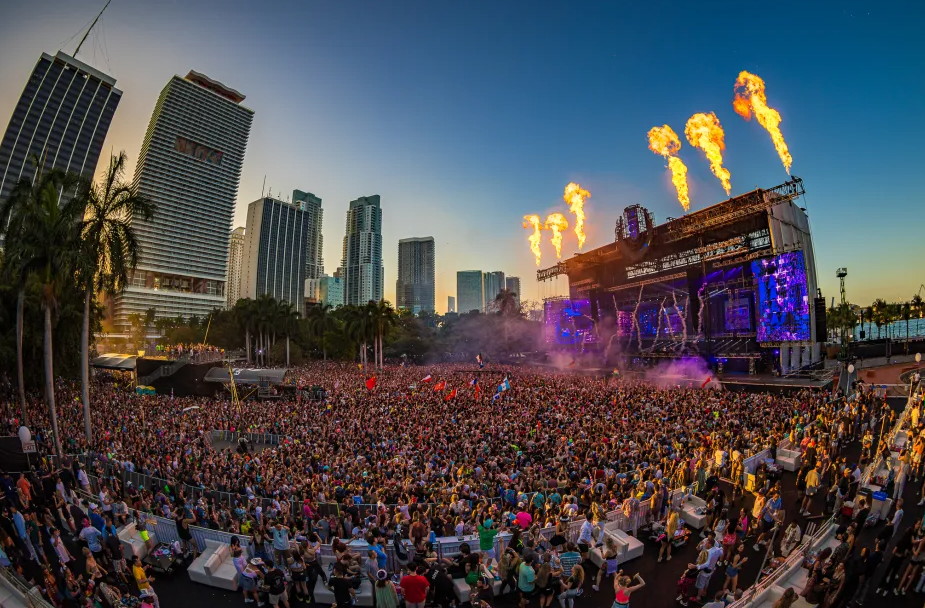
There are festivals—and then there are cultural institutions. Ultra Music Festival has long existed beyond the boundaries of a typical event, evolving into a global ritual that signals the beginning of the electronic music calendar. With the official announcement of its 2027 dates, the industry once again pivots toward Miami, where sound, spectacle, and identity converge for three days that consistently define the year ahead.
Set to take place from March 26 to 28 at Bayfront Park, Ultra’s return is more than a scheduling confirmation—it’s a reaffirmation of its cultural gravity. As the centerpiece of Miami Music Week, the festival remains a magnet for the global dance community, drawing artists, industry leaders, and fans into a shared ecosystem where trends are born and legacies are reinforced.
What makes Ultra unique is not just its scale, but its timing. Positioned at a moment when the industry collectively resets after the winter circuit, the festival acts as both a launchpad and a mirror—reflecting where electronic music stands while hinting at where it’s headed. The early release of limited tickets, nearly a year in advance, is less about logistics and more about demand. It speaks to a loyal global audience that treats Ultra not as a spontaneous experience, but as an essential annual pilgrimage.
This anticipation is only intensified by the lingering afterglow of the 2026 edition. In a weekend filled with high-caliber performances, one moment cut through the noise: Swedish House Mafia reclaiming the Mainstage in a set that blurred nostalgia and reinvention. Joined by Eric Prydz and a constellation of influential names, the performance became a living archive of progressive house history—an echo of a movement that once redefined global dance music.
But it was the emotional tribute to Avicii that elevated the moment into something more profound. As his iconic symbol illuminated the crowd, the festival briefly shifted from spectacle to remembrance, reminding everyone that electronic music is not only about energy—but about legacy, loss, and collective memory. These are the moments that Ultra has mastered: blending scale with sincerity in ways few festivals can replicate.
Looking toward 2027, the absence of a lineup only amplifies the intrigue. Ultra has built a reputation not just on booking the biggest names, but on curating moments—unexpected collaborations, surprise appearances, and genre-defining premieres. In recent years, the festival has also embraced a broader sonic palette, reflecting the rise of melodic techno, Afro house, and hybrid live performances. As the global electronic scene continues to fragment and evolve, Ultra remains one of the few spaces where these worlds collide on equal footing.
Beyond the music, Ultra’s significance lies in its role as a cultural barometer. It is where the industry negotiates its identity in real time—where underground movements brush against mainstream dominance, and where technological innovation meets human connection. From immersive stage designs to globally streamed sets, the festival continues to push the boundaries of what a live electronic experience can be.
And yet, beneath the lasers, visuals, and massive crowds, the essence of Ultra remains strikingly simple: it is about gathering. In a world increasingly defined by digital interaction, the physical convergence of thousands in front of a stage still holds unmatched power. Ultra understands this instinctively, and it is why, year after year, it remains not just relevant—but essential.
As tickets begin to disappear and anticipation quietly builds, one thing is clear: Ultra Miami 2027 is not just another edition. It is the next chapter in a story that continues to shape the rhythm of global electronic culture—one beat, one moment, one memory at a time.