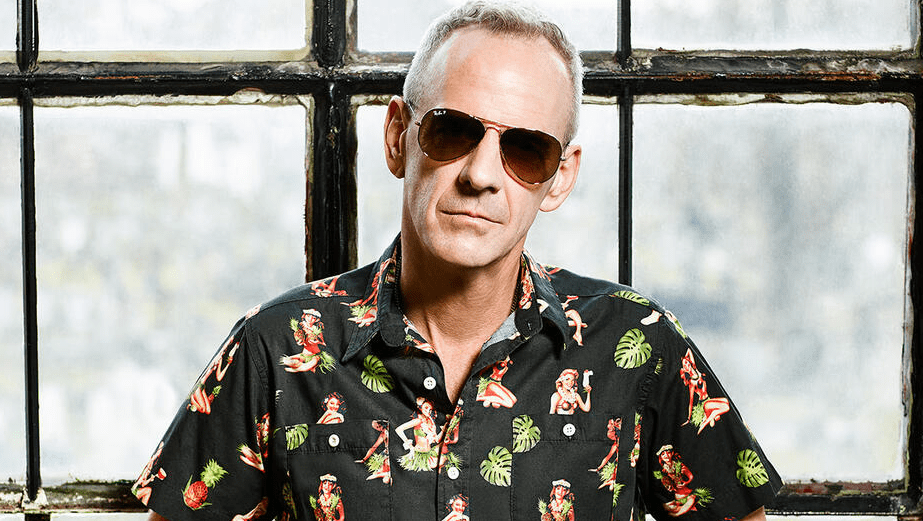
Some artists play festivals. Others rewrite their atmosphere entirely. At Coachella 2026, Fatboy Slim didn’t just deliver a set—he reminded an entire generation why dance music once felt like rebellion, joy, and chaos all at once.
Now, with his full performance circulating online, the moment has extended far beyond the California desert. It’s become a cultural reset—one that reconnects modern festival culture with its most unpredictable roots.
A Set Built on Memory and Movement
From the opening seconds, the intent was clear. A fleeting nod to “Praise You”—arguably one of the most iconic dance tracks ever made—slipped into a cinematic introduction, layering emotion before impact.
Then came the shift.
What followed was a relentless, genre-blurring journey through big beat, house, electro, and pure festival energy. Tracks like “Weapon of Choice” and “The Rockafeller Skank” didn’t just land—they detonated, proving that classics, when delivered with precision, never age. They evolve with the crowd.
And then there was “Satisfaction Skank”—a mashup decades in the making, finally finding its official release and now, its rightful place in a modern festival context.
This wasn’t nostalgia. It was reactivation.
The Coachella Continuum
Fatboy Slim’s relationship with Coachella is not casual—it’s foundational. Having first played the festival in its earliest days, his return in 2026 feels almost symbolic.
Across decades, Coachella has transformed from an alternative gathering into a global cultural institution. And yet, in moments like this, its original spirit resurfaces: unpredictable, eclectic, and deeply rooted in musical discovery.
Placed against a lineup that included boundary-pushing collaborations like Nine Inch Nails x Boys Noize, surprise pop crossovers from Madonna and Sabrina Carpenter, and standout performances from PinkPantheress and DJ Snake, his set stood out not by chasing trends—but by ignoring them entirely.
Why This Set Matters Now
In an era dominated by hyper-polished visuals, pre-programmed drops, and algorithm-driven hits, Fatboy Slim’s approach feels almost radical.
There is looseness in his sets. Imperfection. Risk.
But that’s precisely the point.
Electronic music was never meant to feel controlled. It was built on spontaneity, crate-digging culture, and the collision of sounds that shouldn’t work—but somehow do.
At Coachella 2026, that philosophy cut through the noise.
You could feel it in the crowd’s reaction—not just excitement, but recognition. A reminder of what dance music felt like before it became an industry.
The Enduring Power of Big Beat
Big beat as a genre may not dominate charts anymore, but its DNA runs through everything—from festival drops to crossover pop productions.
And Fatboy Slim remains one of its most important architects.
By bringing that sound back into a modern context, he doesn’t just revisit the past—he reframes it. Showing younger audiences where these sounds come from, while giving longtime fans a moment of reconnection.
What Comes After the Desert
If Coachella was a reminder, the summer ahead looks like a continuation.
With the return of Big Beach Boutique in Brighton and upcoming appearances across the UK, Fatboy Slim is not slowing down—he’s doubling down on what he does best: turning public spaces into shared euphoric experiences.
And if Coachella proved anything, it’s that those experiences are still in demand.
A Legacy That Still Moves
There’s a reason this set is resonating far beyond its original moment.
It’s not just about the tracks. It’s about energy, intention, and the ability to connect across generations without compromise.
In a landscape constantly chasing the next thing, Fatboy Slim offered something different: proof that the foundation still holds.
And when it’s played right, it still moves everything.